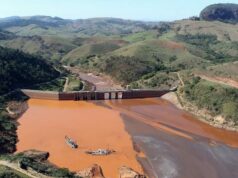
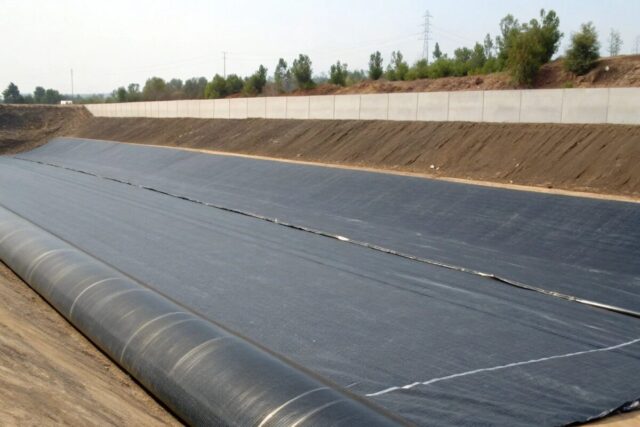
Geomembranes are used to control fluid migration in landfills, reservoirs, mining facilities, wastewater systems, and other containment projects. Because these barriers often operate under demanding conditions, visual inspection alone cannot confirm their quality. Material laboratory testing provides measurable evidence that a geomembrane has the physical, mechanical, and chemical properties required by project specifications.
Verifying Raw Material and Physical Properties
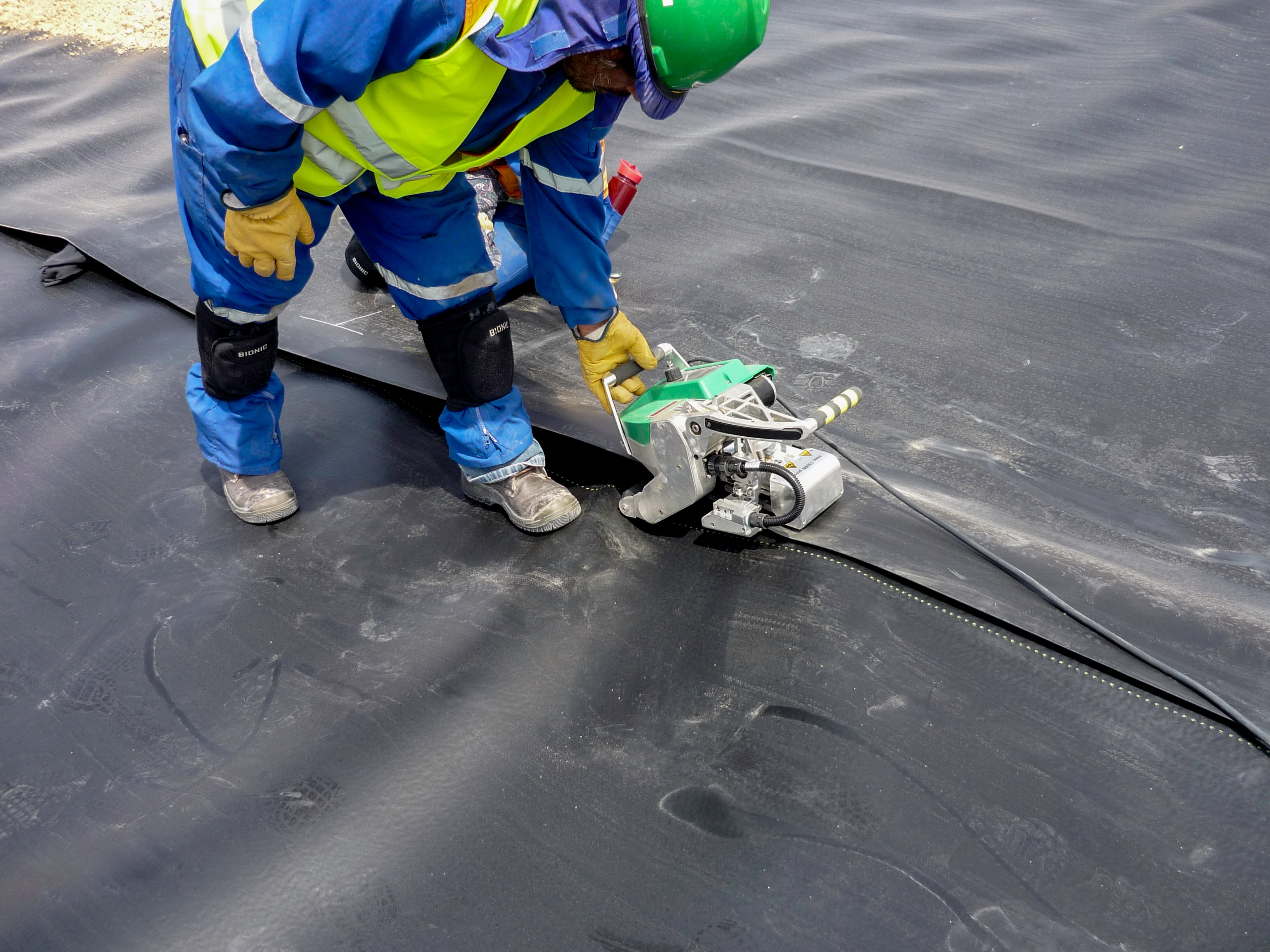
Laboratory evaluation often begins with the basic composition and physical characteristics of the geomembrane. Tests can measure thickness, density, mass per unit area, carbon black content, and carbon black dispersion. These properties influence durability, uniformity, and resistance to ultraviolet exposure.
Thickness testing is particularly important because even small variations may affect puncture resistance and long-term performance.
Density measurements can help confirm that the correct polymer formulation was used, while carbon black analysis shows whether protective additives are distributed consistently throughout the material.
Samples are compared with the values stated in the project specifications and relevant industry standards. If results fall outside the permitted tolerance, the affected production batch may require further investigation before it is approved for delivery or installation. This process helps identify manufacturing inconsistencies before they become expensive field problems.
Assessing Mechanical Strength and Durability
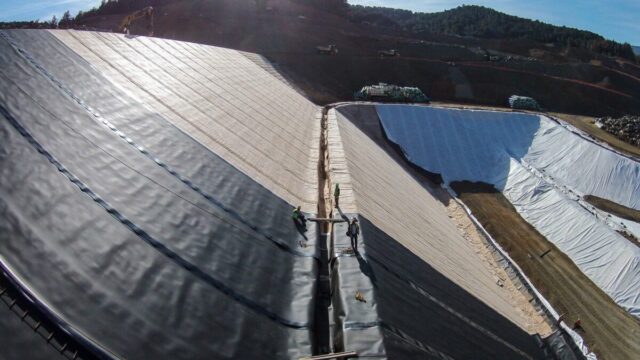
A geomembrane must withstand handling, deployment, welding, settlement, and contact with underlying materials. Mechanical tests evaluate how the product responds to stretching, tearing, puncturing, and concentrated loads. Common evaluations include tensile strength, elongation, tear resistance, puncture resistance, and stress crack resistance.
Tensile testing determines how much force the material can tolerate before breaking and how far it can stretch. Puncture and tear tests indicate whether the liner can resist damage from rough subgrades, drainage aggregates, tools, or installation equipment. For certain polyethylene products, stress crack resistance is also essential because cracking can develop gradually under sustained loading.
Project teams that need independent verification can learn more about geosynthetic testing services and determine which laboratory procedures are appropriate for the specified material, application, and expected site conditions.
These results do not guarantee that damage will never occur, but they demonstrate whether the supplied geomembrane meets the minimum performance criteria established during design.
Confirming Long-Term Performance and Weld Quality
Containment systems may remain in service for decades, so testing must consider more than initial strength. Laboratories can evaluate oxidative induction time, ultraviolet resistance, thermal aging, chemical resistance, and other indicators of long-term durability. Such tests help engineers assess whether the polymer and its additives can tolerate anticipated environmental exposure.
Laboratory work may also support field quality control by testing trial welds or samples removed from installed seams. Peel and shear testing measures seam strength and helps confirm that welding equipment, temperature settings, and operator procedures are producing acceptable joints.
When a result does not meet the specified value, the quality team can trace the sample to a roll, batch, seam, or installation area. Corrective action may include additional sampling, adjusted welding parameters, repairs, or material replacement. Accurate records create a clear chain of evidence for owners, engineers, contractors, and regulators.
Conclusion
Material laboratory testing converts geomembrane quality from an assumption into documented evidence. By checking composition, dimensions, mechanical strength, durability indicators, and seam performance, laboratories help confirm compliance with project requirements.
Testing also allows potential defects to be identified early, when corrective action is usually easier and less costly. Combined with proper design, installation oversight, and field inspection, laboratory verification supports a reliable containment system and reduces long-term project risk.