
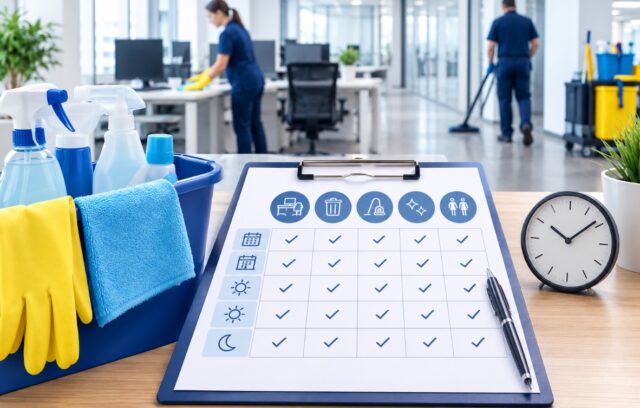
An effective cleaning schedule helps offices and commercial buildings remain hygienic, organised and presentable without wasting time or resources. Rather than assigning the same frequency to every task, businesses should consider how each area is used, how quickly it becomes dirty and whether it presents a higher hygiene or safety risk.
Assess the Building and Identify Priority Areas
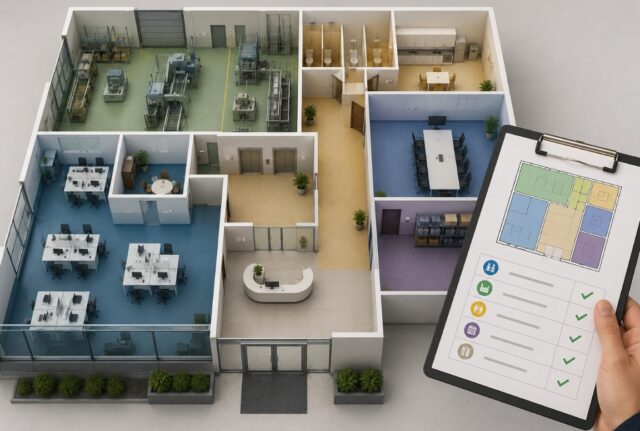
The first step is to divide the premises into cleaning zones and assess the needs of each one. Businesses with offices attached to production or industrial areas may require both routine office maintenance and specialised factory cleaning services. Companies can visit this website to review commercial cleaning options suited to different types of workplaces.
High-traffic areas should receive the most frequent attention. Entrances, reception areas, corridors, lifts, bathrooms, kitchens and shared workspaces can collect dirt quickly because they are used by many people throughout the day. Frequently touched surfaces such as door handles, light switches, lift buttons and shared equipment should also be included in the daily schedule.
Lower-traffic spaces, including storage rooms, private offices and rarely used meeting rooms, may need cleaning only several times per week. The schedule should also account for flooring materials, employee numbers, visitor traffic, operating hours and any industry-specific hygiene requirements.
Separate Daily, Weekly and Periodic Tasks
Dividing cleaning duties by frequency makes the schedule easier to manage. Daily tasks usually include emptying bins, vacuuming or mopping high-traffic floors, cleaning bathrooms, sanitising kitchen surfaces and wiping frequently touched areas. Reception desks, meeting tables and visible glass should also be checked regularly.
Weekly tasks may include detailed dusting, cleaning skirting boards, wiping internal windows, vacuuming upholstered furniture and removing marks from doors or partitions. Less accessible floor edges, spaces beneath furniture and shelving should also be addressed before dust and debris accumulate.
Periodic cleaning covers tasks that require more time, specialised equipment or professional treatment. Carpet extraction, floor polishing, upholstery cleaning, high-level dusting, external window cleaning and ventilation grille maintenance may be scheduled monthly, quarterly or several times per year.
Additional cleaning should be arranged after renovations, workplace events, office relocations or periods of increased illness. Seasonal conditions may also affect the plan, particularly when rain, dust or heavy foot traffic causes entrances and floors to become dirty more quickly.
Assign Responsibilities and Review Performance
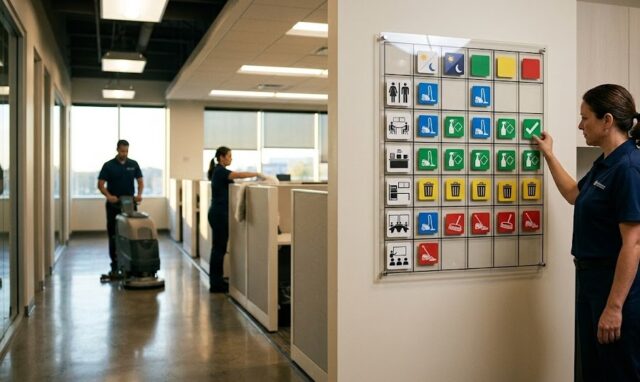
A cleaning schedule is only effective when responsibilities are clearly defined. Each task should state where it must be completed, how often it is required and who is responsible. Businesses using an external contractor should include these details in the service agreement to reduce uncertainty and prevent important areas from being overlooked.
Cleaning checklists can help staff and supervisors confirm that work has been completed. Regular inspections are also useful for identifying recurring issues, such as overflowing waste, low bathroom supplies or areas that require more frequent attention.
The schedule should remain flexible. Changes in staffing levels, operating hours, building layout or visitor numbers may increase or reduce cleaning requirements. Feedback from employees can also reveal problems that are not immediately visible during inspections.
Businesses should review the schedule periodically and compare it with actual workplace conditions. Tasks that are consistently unnecessary can be reduced, while areas that become dirty between visits should be serviced more often.
Conclusion
An effective commercial cleaning schedule should reflect how the building is actually used. By prioritising high-traffic areas, separating daily and periodic duties, assigning clear responsibilities and reviewing results regularly, businesses can maintain reliable standards. A well-planned schedule improves hygiene, supports a professional image and ensures that cleaning resources are used where they provide the greatest value.